The law said households wouldn’t pay. Florida’s about to test that.
Florida passed SB 484 so data centers cover their own power costs. Duke Energy Florida’s first large-load tariff filing still leaves a multi-billion gap — and no separate rate class yet.
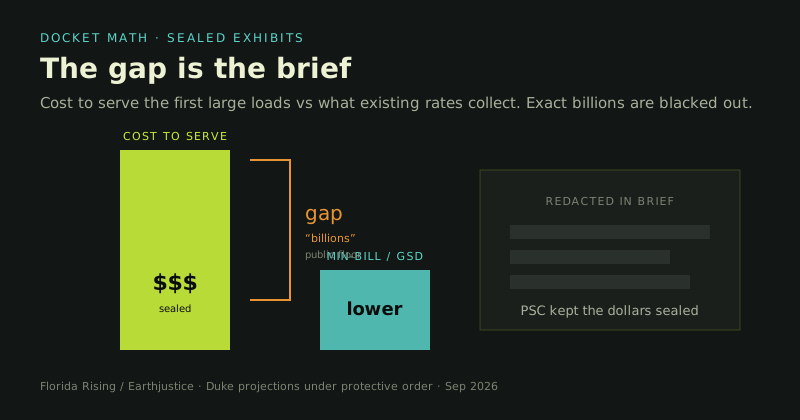
Florida passed Senate Bill 484 so large loads cover their own power costs. The Duke Energy Florida large load tariff — the first filed under that law — still leaves a multi-billion gap between the cost to serve the first campuses and what existing rates would collect, and it still has no separate rate class. Public counsel says the proposal doesn’t even try to comply. That is the invoice.
Open on the gap
Florida Rising’s counsel, working from Duke projections compelled in discovery, says the cost to serve the utility’s first large loads runs billions above the revenue those loads would pay under the filing. The exact figure is under a protective order. The Public Service Commission redacted it from the public brief. Counsel can say “billions” on camera. He cannot say how many.WFTV, 16 Sep 2026
Do not invent a per-household number the docket has not released. The public floor is the gap itself: cost to serve versus minimum-bill / existing-schedule revenue, with the dollars sealed.
What SB 484 requires
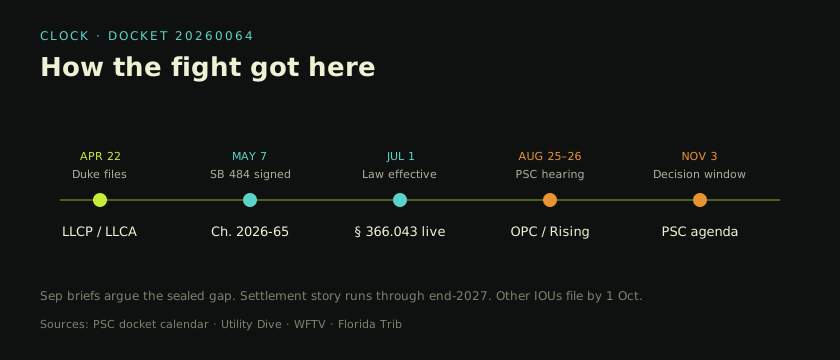
Governor DeSantis signed SB 484 on 7 May 2026. It is Chapter 2026-65. It took effect 1 July. The operative text is now § 366.043, Florida Statutes.Florida Senate
A large load customer is anyone with an anticipated monthly peak of 50 megawatts or more at a single location. The tariff must reasonably ensure that customer bears its own full cost of service — connection, incremental transmission, incremental generation, other infrastructure, operations and maintenance, and any other costs required to serve it — and that those costs are not shifted to the general body of ratepayers. Nonpayment risk may not sit on households.
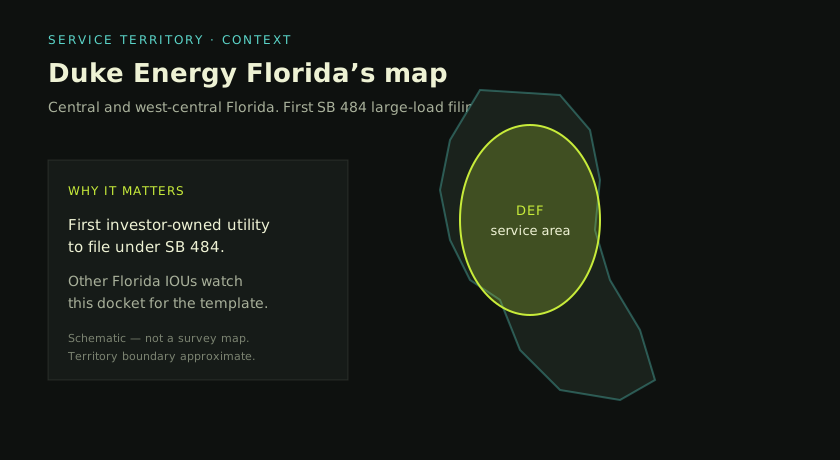
Every investor-owned utility had to file a compliant tariff by 1 October 2026. Duke went first.

What Duke Energy Florida filed
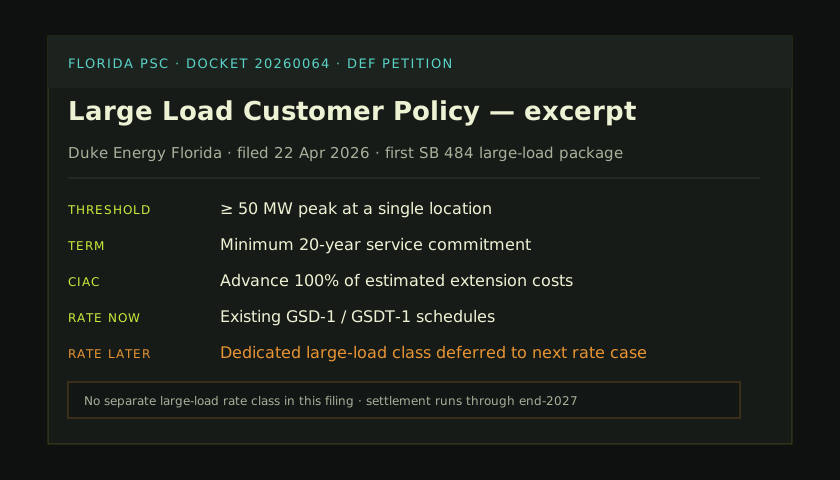
On 22 April 2026 Duke Energy Florida petitioned the Florida PSC in docket 20260064 for a Large Load Customer Policy, a customer agreement, and CIAC changes — the first Duke Energy Florida large load tariff package under the new statute.PSC staff
The commercial terms are real: a 20-year minimum term, minimum monthly bills, early-termination fees, a system-impact fee, and a requirement that large-load applicants advance 100% of estimated costs to extend service.
The rate class is not. Until the next rate case, these customers would take service under existing GSD-1 / GSDT-1 schedules. Duke says a dedicated large-load rate comes later — after its settlement period ends at the close of 2027 — when a full cost-of-service study can be filed.
The fight
Walt Trierweiler, Florida’s public counsel, told commissioners the proposal “doesn’t attempt to comply with the most basic provisions of SB 484,” because Duke leans on a settlement freeze — and the statute carries no settlement exemption.Utility Dive, 27 Aug 2026
Bradley Marshall, Earthjustice counsel for Florida Rising, put the downside cleanly: if a data-center bubble bursts, “the general body of customers will be left holding the bag for billions and billions of dollars of infrastructure in the form of generation and transmission that it does not need.”
Duke’s counsel, Dianne Triplett, answered with three claims: base rates are frozen through the settlement; significant large-load costs are unlikely before then; and if costs do land early, shareholders eat them during the settlement window. No party, she said, has shown a path for this tariff to raise any customer’s rates before end-2027.
PSC staff pointed at a clause in Duke’s 2024 settlement that lets the utility modify base rates for new governmental impositions. Whether SB 484 trips that clause is part of the fight.
Duke’s public statement after the sealed-brief coverage: first utility to file under the law; no large-load client on the system today; signer of the national Ratepayer Protection Pledge; requested a rate cut on 3 September that would land in 2027.WFTV A pledge is theater once. A rate cut in another proceeding does not fill a sealed cost-of-service gap.
What the stock is underwriting
Duke Energy Florida is the regulated subsidiary. The equity behind the filing is DUK — the NYSE parent. When counsel says shareholders eat shortfalls through the settlement window, that is a claim about the parent’s residual, not a line on a household bill.
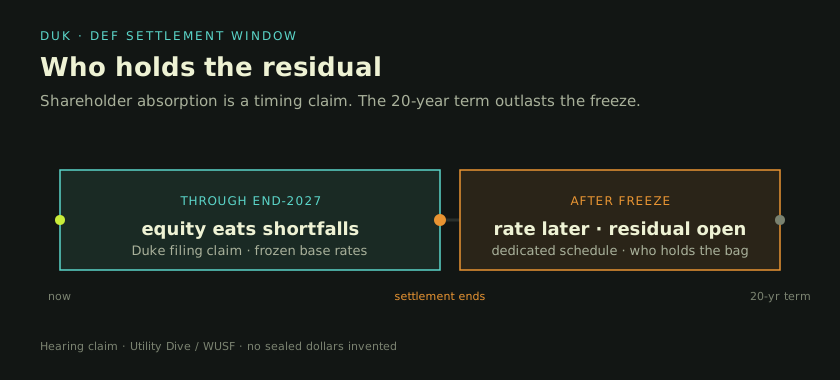
Through end-2027, DEF’s settlement keeps base rates frozen. Duke’s story at the hearing — and again in a WUSF statement from spokesperson Ana Gibbs — is that if a large load lands early and GSD revenue does not cover cost to serve, the gap falls to shareholders until the freeze lifts.WUSF, 25 Aug 2026 Households do not get a mid-settlement true-up on that theory. Equity eats the lag; ratepayers wait for the next case.
“Rate later” is the other half of that lag. The dedicated large-load schedule is promised after the settlement — Duke has said it will file for effectiveness by 1 January 2028. Until then, recovery sits on yesterday’s commercial rates. Delayed cost recovery by design: contract teeth now, cost-of-service study later.
If a campus slips or never energizes, the CIAC advance and termination charges are supposed to protect the wires build. Florida Rising’s downside is still stranded generation and transmission once the settlement window closes. Equity’s version of the same risk is earnings pressure if absorption lasts longer than the freeze — neither side has put a public dollar figure on that residual.
The settlement hedges timing. It does not settle who holds the bag once the freeze ends and the 20-year term is still running. Ratepayers or the stock: that is what the November window is for.
Why Florida is the test
Virginia already wrote numbers into the tariff: covered large loads pay at least 85% of contracted transmission and distribution and 60% of generation whether they use the power or not, on minimum 14-year contracts. Ohio pushes large loads to fund the build-out 100% up front. Those are live rules — see the older watts brief for the national frame.Who pays for the watts
The House Ratepayer Protection Act cleared 417–3 and still mostly tells states to “consider” standards. Soft federal language dressed as toughness.mGrid
Florida did something sharper: a hard statute with a filing deadline. Duke’s petition is the first real stress test of that statute. If a 20-year contract on yesterday’s commercial rate clears as “full cost of service,” every other Florida utility just learned what compliance looks like.
What to open the PDF for
-
Incremental cost vs contracted revenue
For the named large loads Duke modeled: cost to serve versus what GSD / minimum-bill revenue recovers. If the number is under a black bar, say so.
-
Rate class now or “later”
Is there a separate large-load schedule with numeric rates in this tariff, or only a promise tied to the next rate case after 2027?
-
Collateral and exit fees
What happens if the campus slips, downsizes, or never energizes. Minimum bills and termination charges are only as good as the collateral behind them.
-
Who eats stranded wires
Generation and transmission built for a tenant that never shows. Settlement-period shareholder absorption ends. The tariff term does not.
-
Settlement vs statute
Duke’s freeze-through-2027 story — and whether that hedges ratepayers or only parks the residual on DUK until the dedicated rate. Public counsel: SB 484 has no exemption. Staff: the settlement’s “governmental imposition” clause exists.
-
VA / OH as the stick
One paragraph, not a remake. Does Florida’s first filing get as close to 85/60/14 or 100% up front as “full cost of service” implies?
Households or the cluster. The PSC’s November window is where that sentence stops being a slogan and becomes an order. Until then, Florida has a protection law — and a Duke Energy Florida large load tariff that still leaves the invoice unfinished.