Nvidia wrote a put.
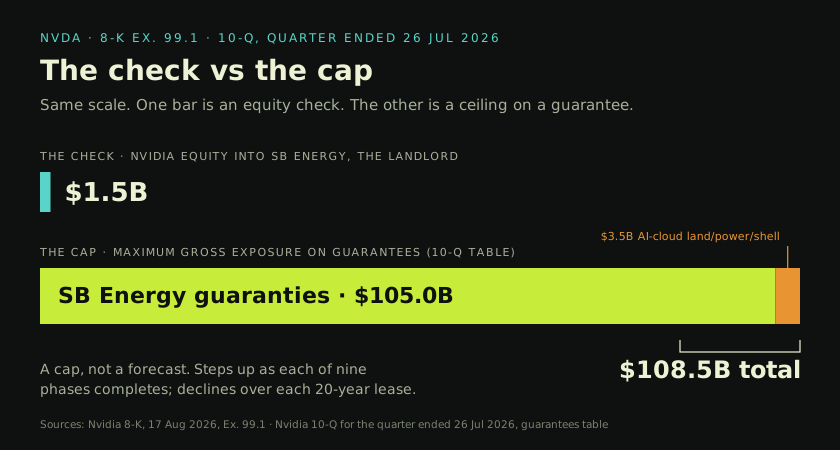
The $105B is a ceiling on what Nvidia could owe OpenAI’s landlord if OpenAI stops paying rent. The actual check was $1.5B, and it went to the landlord.
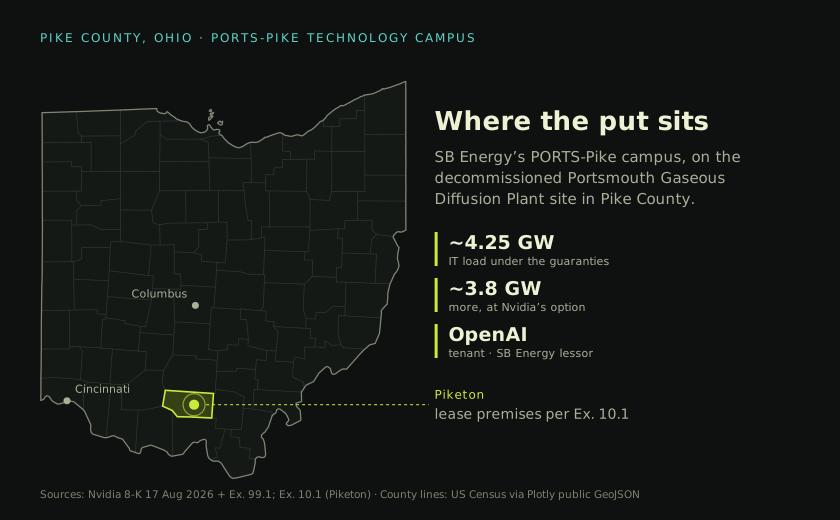
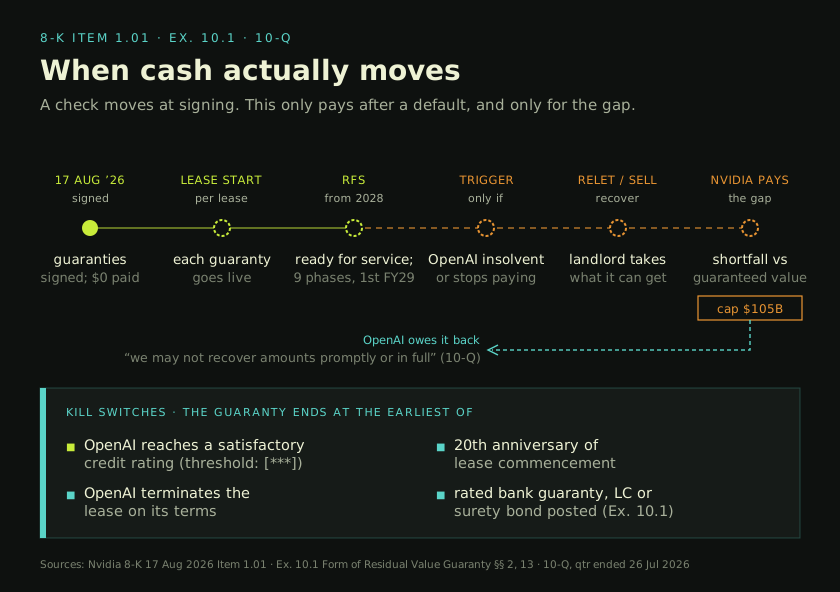
Nvidia did not hand OpenAI $105 billion. On 17 Aug 2026 it signed residual value guaranties with SB Energy, the landlord building the PORTS-Pike campus in Pike County, Ohio, and capped what it could ever owe under them at $105B. OpenAI is the tenant. Nvidia pays only if OpenAI goes insolvent or stops paying rent, only after SB Energy has met the lease’s ready-for-service conditions (expected beginning in 2028), and only for the gap between a guaranteed value and whatever a new tenant or a sale brings back. That’s a put.Nvidia 8-K, 17 Aug
The misread
Put “$105B” and “OpenAI” in the same headline and most people read a wire transfer. The filing describes something else: a ceiling on a contingent payment to a landlord.
There is a check in this deal. It’s $1.5B of equity Nvidia said it will put into SB Energy, joining SoftBank Group and OpenAI as investors. That number lives in the press release attached to the 8-K, not in the guaranty.8-K Ex. 99.1 So the cash goes to the landlord. The cap is seventy times bigger, and nothing can come out of it before the buildings are ready for service.
Don’t add the two numbers together, and don’t swap them. One is an investment. The other is Nvidia’s balance sheet standing behind OpenAI’s rent.
What the paper says
Item 1.01 of the 8-K runs a few paragraphs. Here’s what’s in it without the padding.8-K Item 1.01
Nvidia signed multiple residual value guaranties with SB Energy on leases for about 4.25 GW of IT load at what the filing calls the Portsmouth Site. Each one generally goes live when its lease commences. Nvidia can back roughly 3.8 GW more, at its sole discretion. Total payment obligation for the initial commitment is cumulatively capped at $105B.
The trigger is OpenAI: insolvency that causes a lease default, or a failure to pay. Then Nvidia owes roughly the shortfall between the lease’s guaranteed minimum value and whatever a replacement lease or a sale recovers. Before it pays, Nvidia gets to pick. It can take over the lease, make the landlord relet, run a sale, let the lease terminate, or sit on it for up to a year while covering specified project costs. OpenAI has agreed to reimburse and indemnify Nvidia for anything Nvidia actually pays.
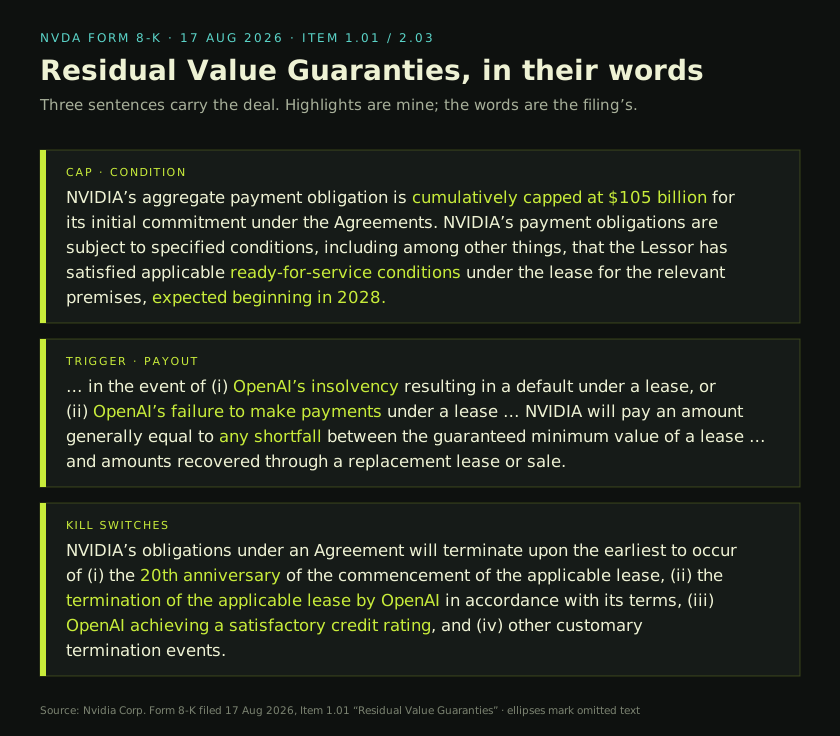
The form of the guaranty, filed as exhibit 10.1 to the 10-Q, puts the premises in Piketon and writes the cap out longhand: $105,000,000,000. It says the guaranteed minimum value is made of data center, power and transmission related costs tied to the 4.25 GW. Then it gets shy. The Covered Loss Amount formula, the discount rate and the credit-rating thresholds are all [***].Ex. 10.1
The balance-sheet shape
The 10-Q for the quarter ended 26 Jul 2026 fills in what the 8-K skips.Nvidia 10-Q The guarantee amounts step up as each of nine construction phases completes, and the first is expected in Nvidia’s fiscal 2029. Exposure is expected to shrink over each phase’s 20-year lease as OpenAI pays. And the coverage is limited to defined portions of lease and power payments, not the full cost of the site or everything OpenAI owes.
Then there’s Nvidia’s own table of maximum gross exposure on guarantees. $3.5B of land, power and shell guarantees for AI clouds, plus $105.0B for SB Energy, comes to $108.5B.
The $3.5B is a different book: guarantees on other AI cloud partners’ data center leases, where the partners have put $712 million in escrow against Nvidia’s exposure. I didn’t find an escrow line for SB Energy anywhere in the filing.
Nvidia also filed the 8-K under Item 2.03, the box for a direct financial obligation or an obligation under an off-balance-sheet arrangement. So it’s disclosed. But $108.5B is a worst case on paper, not a forecast, and before the first lease commences the SB Energy guaranties generally aren’t live yet. The number worth watching is how much of that cap is actually switched on after each phase lands.
Writing a put
CreditSights put a name on this kind of support a day before the SB Energy 8-K. In a Bloomberg story The Business Times ran on 16 Aug 2026, about Nvidia getting ready to offer residual-value support on AI debt deals, the analysts said Nvidia is effectively “writing a put.” Then: “This is pro-cyclical and exacerbates boom-bust potential. The guarantee is nearly costless in the boom phase, but becomes most relevant in a severe, abrupt downturn, if/when customers are defaulting and market value for hardware is falling.”Business Times / Bloomberg, 16 Aug Their worry was hardware values. In Ohio the collateral is buildings and power built for one tenant. Same shape.
The label fits. Someone who sells a put gets paid something up front and owes money only if the price falls below a strike. What Nvidia gets up front is the site: in exchange for the guarantees, the campus will exclusively host Nvidia AI infrastructure, subject to limited exceptions. The strike is the guaranteed minimum value. The payout is the gap between that and what a relet or sale fetches. In a boom the gap is zero and the put looks free.
Puts get exercised in bad markets, though. The world where OpenAI can’t make rent on 4.25 GW is not a world where another tenant is lining up to pay the same rent for the same buildings in southern Ohio. The cap doesn’t fix that. It stops the number at $105B. It doesn’t stop it from showing up at the worst possible time.
The rating kill switch
Read the termination list again. The 20th anniversary of the lease, fine. OpenAI terminating its own lease on its terms, fine. Item (iii) is the one that matters: Nvidia’s obligation ends when OpenAI achieves a satisfactory credit rating.8-K Item 1.01
The exhibit is more specific and tells you less. The guaranty ends if the tenant or its parent reaches a credit rating of [***], if a replacement tenant does, or if the tenant posts a bank guaranty, letter of credit or surety bond from an issuer rated at least [***].Ex. 10.1 § 13 The rating that lets Nvidia walk is redacted.
That tells you what Nvidia is actually selling. Its credit stands in for OpenAI’s until OpenAI’s own credit is good enough for the landlord. If OpenAI gets stronger, Nvidia is released. If OpenAI gets weaker, Nvidia stays on the hook, and the amount on the hook can grow with every phase that comes online. The guaranty is most likely to disappear in exactly the world where nobody needed it.
What to open
-
The cap, then the check
8-K Item 1.01 for the $105B cap. Exhibit 99.1 for the $1.5B equity into SB Energy. Different instruments, different counterparties. Don’t add them.
-
When each guaranty goes live
Lease commencement switches it on. Payment waits on ready-for-service, expected beginning in 2028. The 10-Q says nine phases, the first in fiscal 2029, with amounts stepping up as each one completes. Track how much of the cap is live each quarter.
-
Any OpenAI credit rating
Item (iii) ends the guaranty on a satisfactory rating, and the exhibit redacts the threshold. A rating, or a rated letter of credit or surety bond, is the event that ends Nvidia’s exposure.
-
The reimbursement promise
OpenAI agreed to reimburse and indemnify Nvidia. The exhibit says Nvidia looks solely to the tenant and its parent for recoupment. The 10-Q risk factors say it plainly: “we may not recover amounts promptly or in full.”
-
The table, every quarter
$105.0B + $3.5B = $108.5B as of the quarter ended 26 Jul 2026. Nvidia also holds an option to add credit support for roughly 3.8 GW more, in phases. Open the guarantees note before the earnings slides.
So who eats it? If OpenAI stops paying and a campus built around one tenant’s Nvidia racks is worth less to the next one, SB Energy collects the shortfall up to the guaranteed minimum value, Nvidia writes that check up to $105B, and Nvidia’s recovery is a reimbursement claim on the tenant that just defaulted. That’s the invoice.