California signed the protection. The tariff isn’t written.
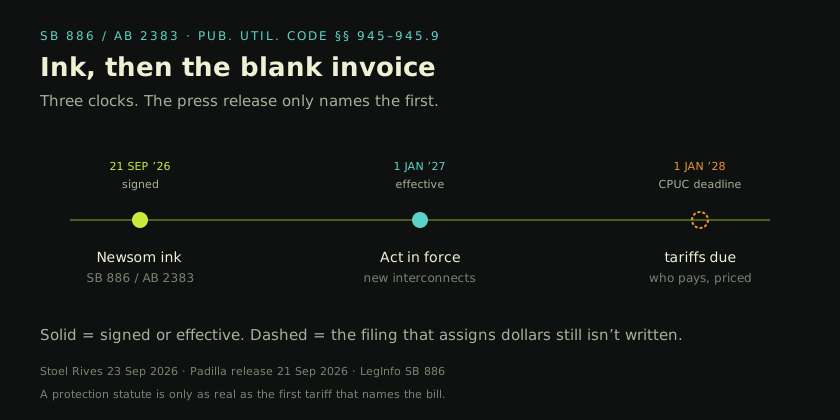
Newsom signed SB 886 / AB 2383 on 21 Sep. The CPUC still has until 1 Jan 2028 to write who the first tariff names.
On 21 Sep 2026 Governor Newsom signed SB 886 and AB 2383 — California’s Technology Innovation and Ratepayer Protection Act. Data centers are supposed to pay for their own transmission upgrades and incremental generation. The CPUC still has until 1 Jan 2028 to write the tariffs that make that real (the Act itself takes effect 1 Jan 2027). The law is ink. The invoice is the filing.Stoel Rives, 23 Sep
Open on the ink
Padilla’s release sold “nation-leading” ratepayer protection the same day the Governor signed.Padilla, 21 Sep TURN cheered accountability. Net Zero California talked sophistication. Fine. Read the clocks, not the slogan.
Signed 21 Sep. Effective 1 Jan 2027. CPUC interconnection and generation tariffs due by 1 Jan 2028. One clock per sentence. Until that last date produces a tariff with numbers, households are still holding optionality dressed as reform.
What the Act requires
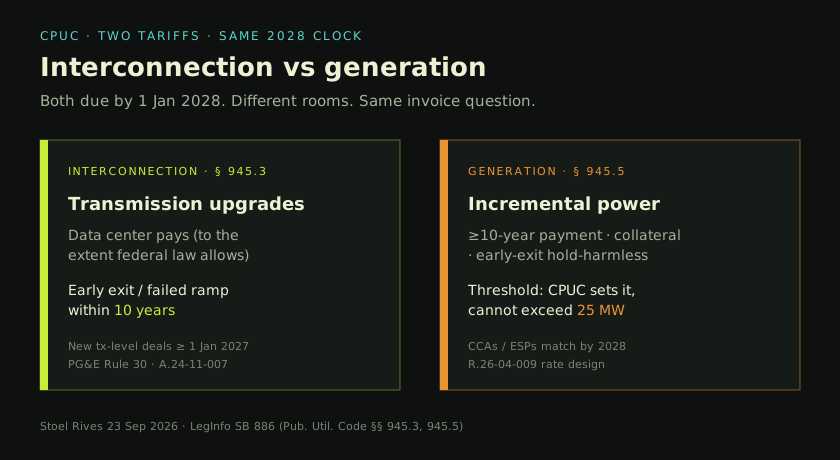
The package adds Pub. Util. Code §§ 945–945.9. Two tariff tracks, same deadline.LegInfo SB 886
Interconnection (§ 945.3): for data centers seeking retail service at transmission voltage, the campus pays transmission facility upgrades and usage — including, to the extent federal law allows, network upgrades needed to connect or move more power. Refunds of early contributions are capped and load-tied. Leave within 10 years of initial interconnection, or fail the load ramp the Commission sets, and an early-termination fee hits. Applies to new transmission-level interconnection agreements on or after 1 Jan 2027. Utilities can still use exceptional-case filings before the Commission finishes the tariff.
Generation (§ 945.5): each electrical corporation files a generation service tariff so the data center pays incremental generation cost increases from its load — no stranded generation parked on everyone else. Payment mechanism at least 10 years. Upfront collateral or prepayment. Early-exit fees sized to hold other ratepayers harmless. Behind-the-meter zero-emissions resources can shrink the funding requirement, on Commission terms.
The Commission sets the generation-tariff peak-demand threshold. It cannot exceed 25 MW. Below that line, the generation tariff does not apply. Publicly funded research, public safety, certain national-security, publicly owned, and utility/telecom facilities get exemptions. CCAs and ESPs must adopt matching generation tariffs by the same 1 Jan 2028 date.

Where the fight moves
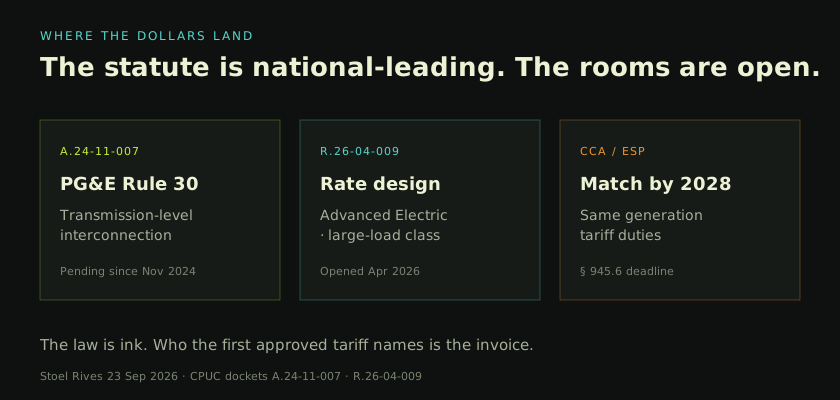
The statute is national-leading on paper. Dollars land in rooms that already exist.
PG&E’s Rule 30 application (A.24-11-007), filed November 2024 for transmission-level interconnection between 50 and 230 kV, is still pending — and is the natural home for the interconnection tariff the Act demands. The Commission’s Advanced Electric Rate Design rulemaking (R.26-04-009), opened April 2026, is where generation and large-load rate design will get fought. CCAs and ESPs are on the same 2028 clock for matching generation tariffs. That is the map. Not the press release.
West-coast pressure
Oregon, one beat. Pacific Power endorsed a plan that assigns generation, transmission, and open-market power costs to the large load; requires ≥10-year contracts, early-exit fees, and collateral; and adds a 1¢/kWh surcharge above 100 MW for low-income efficiency. OregonLive carried it 23 Sep — same week Stoel wrote California’s implementation alert. Meta and Amazon objected earlier; the Data Center Coalition still objects. The PUC takes it up next month.OregonLive, 23 Sep Proof the invoice fight is live on the West Coast. Not a remake of this brief.
What to open
-
Statute vs press release
Padilla’s “pay all transmission / cover all generation” line is the principle. The tariff is the methodology, the collateral formula, and the early-exit math. Open §§ 945.3 and 945.5, not the release.
-
Rate class now or after the order
Is there a separate data-center schedule with numbers today, or only after the CPUC finishes by 1 Jan 2028? California designed a blank clock. Florida’s fight was a filing gap under an older statute — different paper, same question of who pays while the rate is unfinished.
-
Who posts collateral if the campus slips
Upfront collateral / prepayment and early-termination fees only protect ratepayers if they are sized and collected. Ask who posts, when, and what happens on a missed ramp.
-
≤25 MW vs larger-load frames
California’s generation-tariff ceiling is 25 MW. That pulls more campuses into the new class than a 50 MW large-load frame. Map your queue against the threshold the Commission actually sets — it can be lower than 25.
-
Which docket writes first
Rule 30 / A.24-11-007 for wires. R.26-04-009 for generation rate design. CCA/ESP filings on the same deadline. The first approved tariff that assigns dollars is the product.
Households or the campus. Until the CPUC prices upgrades, incremental generation, exit, and collateral, California has a protection statute — and a data-center tariff that still isn’t written. The invoice is who the first approved tariff names.